Minesweeper
Minesweeper is a well-known puzzle that first appeared as a computer game in 1983, gaining worldwide popularity after being bundled with Microsoft Windows. In its classic digital form, the player reveals squares of a grid, using numerical clues to avoid hidden mines.
A logic puzzle variant of Minesweeper, designed for paper-and-pencil solving, adapts these mechanics into a purely deductive challenge. In this version, some squares are already revealed and display numbers indicating how many mines are located in the surrounding neighboring cells. Unlike the computer game, no additional squares may be revealed during solving — instead, the solver must logically determine and mark the locations of all remaining mines.
In contrast to the standard game, where guessing may be required, paper Minesweeper puzzles are typically constructed to have a unique solution, allowing them to be solved entirely by logical reasoning.
This logic variant appeared in published form under the name “Tentaizu” (天体図), meaning “star map” in Japanese. These puzzles were featured in Southwest Airlines’ in-flight magazine Spirit during 2008–2009, introducing the genre to a broader audience
A logic puzzle variant of Minesweeper, designed for paper-and-pencil solving, adapts these mechanics into a purely deductive challenge. In this version, some squares are already revealed and display numbers indicating how many mines are located in the surrounding neighboring cells. Unlike the computer game, no additional squares may be revealed during solving — instead, the solver must logically determine and mark the locations of all remaining mines.
In contrast to the standard game, where guessing may be required, paper Minesweeper puzzles are typically constructed to have a unique solution, allowing them to be solved entirely by logical reasoning.
This logic variant appeared in published form under the name “Tentaizu” (天体図), meaning “star map” in Japanese. These puzzles were featured in Southwest Airlines’ in-flight magazine Spirit during 2008–2009, introducing the genre to a broader audience
Rules
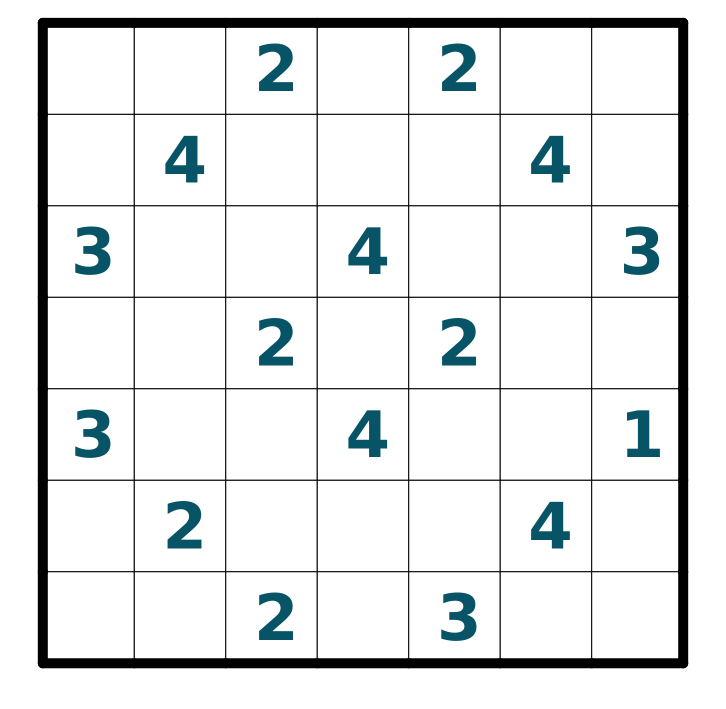
Place a mine into some of the empty cells so that each number represents the total count of mines in neighboring cells, including diagonally adjacent cells.
Explainer videos
Click to see the answer.